



CHICAGO — The Rev. Jesse Jackson passed away on Tuesday, Feb. 17, at the age of 84.
The Civil Rights leader, minister and politician, who was by the side the Rev. Dr. Martin Luther King when King was assassinated, went on to make history as the first major Black candidate for the presidency.
“Our father was a servant leader — not only to our family, but to the oppressed, the voiceless, and the overlooked around the world,” the Jackson family said in a statement. “We shared him with the world, and in return, the world became part of our extended family.”
A memorial service is being planned to take place in Chicago.
Former President Barack Obama, the nation’s first Black president, paid tribute, saying he and former First Lady Michelle Obama “stood on his shoulders.”
“For more than 60 years, Reverend Jackson helped lead some of the most significant movements for change in human history. From organizing boycotts and sit-ins, to registering millions of voters, to advocating for freedom and democracy around the world, he was relentless in his belief that we are all children of God, deserving of dignity and respect,” reads the statement issued by the Obamas.
“Reverend Jackson also created opportunities for generations of African Americans and inspired countless more, including us. Michelle got her first glimpse of political organizing at the Jacksons’ kitchen table when she was a teenager. And in his two historic runs for president, he laid the foundation for my own campaign to the highest office of the land,” the statement continued. “Michelle and I will always be grateful for Jesse’s lifetime of service, and the friendship our families share. We stood on his shoulders. We send our deepest condolences to the Jackson family and everyone in Chicago and beyond who knew and loved him.”
Rev. Al Sharpton said Jackson was a role model for him.
“Today, I lost the man who first called me into purpose when I was just twelve years old. And our nation lost one of its greatest moral voices,” said Sharpton in a statement. “The Reverend Jesse Louis Jackson was not simply a civil rights leader; he was a movement unto himself. He carried history in his footsteps and hope in his voice. One of the greatest honors of my life was learning at his side. He reminded me that faith without action is just noise. He taught me that protest must have purpose, that faith must have feet, and that justice is not seasonal, it is daily work.”
Rev. Bernice King, daughter of Rev. Dr. Martin Luther King, called Jackson a “gifted negotiator and a courageous bridge‑builder, serving humanity by bringing calm into tense rooms and creating pathways where none existed.”
“My family shares a long and meaningful history with him, rooted in a shared commitment to justice and love,” she said. “As we grieve, we give thanks for a life that pushed hope into weary places.”
Jackson was born Oct. 8, 1941, in Greenville, South Carolina, where he began his lifelong work fighting for civil rights.
His biography recounts how, while visiting home for Christmas break during his freshman year at the University of Illinois, Jackson needed a book but the town’s white-only library wouldn’t lend it to him. Six months later, on July 16, 1960, he and seven other students held a sit-in at the library and were arrested for protesting. After his experience as a member of the “Greenville Eight,” Jackson transferred to North Carolina Agricultural & Technical College, a historically Black school in Greensboro, N.C.
His burgeoning activism would bring him in 1965 to march alongside Martin Luther King Jr. and others in Selma, Ala., answering King’s call for supporters of a local voting rights campaign. Jackson became a close ally of King — eventually leaving his graduate studies at the Chicago Theological Seminary to join King’s Southern Christian Leadership Conference. He became the Chicago coordinator and a year later, in 1967, the national leader of the SCLC’s Operation Breadbasket, which was dedicated to improving the economic conditions of Black communities in the U.S.
In April 1968, Jackson traveled with King to Memphis, Tenn., where he witnessed the civil rights leader’s assassination.
King’s death marked the beginning of the end for Jackson’s association with the SCLC. By 1971, he split with the group and formed his own organization, called Operation PUSH. The group continued Jackson’s work to increase Black Americans’ political strength and political opportunities.
Jackson later merged Operation PUSH with his National Rainbow Coalition to form the Rainbow PUSH Coalition, which became a prominent civil rights organization.
Throughout the 1970s and 1980s, Jackson, who became an ordained Baptist minister in 1968, increasingly became an influential player on the national stage.
In 1983, Jackson organized a voter registration drive in Chicago that is credited as being the key factor for the election of the city’s first Black mayor, Harold Washington.
Jackson launched a bid to become the Democratic nominee for president first in 1984. He became the first Black candidate to win a major party’s primary, and went on to win more than 18% of the total primary vote.
“Merely by being black and forcing other candidates to consider his very real potential to garner black votes, which they need, Jackson has had an impact,” read a 1984 New York Times profile.
Four years later, in 1988, Jackson ran again, this time winning 11 primaries and caucuses and drawing in 6.9 million votes.
In 2001, Jackson publicly acknowledged fathering a daughter, Ashley Jackson, born in May 1999, with Karin Stanford, a former employee at his Rainbow/PUSH Coalition. The admission followed media rumors, leading to a public apology from Jackson and a temporary, brief step back from public life.
NAACP Chairman of the Board, Leon W. Russell, NAACP Vice Chair of the Board, Karen Boykin Towns, and NAACP President & CEO, Derrick Johnson, released a joint statement praising Jackson’s accomplishments.
“Reverend Jesse Jackson was not only a civil rights icon — he was family to the NAACP. His work advanced Black America at every turn. He challenged this nation to live up to its highest ideals, and he reminded our movement that hope is both a strategy and a responsibility. His historic run for president inspired millions and brought race to the forefront of American politics.
“We honor his legacy by continuing the work he championed: protecting the right to vote, expanding economic opportunity, and fighting for the freedom and dignity of Black people everywhere,” reads the statement.
Jackson was admitted to a hospital in November, after living more than a decade with progressive supranuclear palsy (PSP), according to his Rainbow PUSH Coalition. PSP affects patients’ ability to walk and swallow and can lead to dangerous complications.
Jackson revealed he had Parkinson’s in 2017. He was treated as an outpatient at Northwestern Medicine in Chicago for at least two years before he shared his diagnosis with the public.
Jackson is survived by his wife of over 60 years, Jacqueline Lavinia Brown Jackson, and their five children: Santita, Jesse Jr., Jonathan, Yusef, and Jacqueline. He is also survived by daughter Ashley Laverne Jackson, and numerous grandchildren.
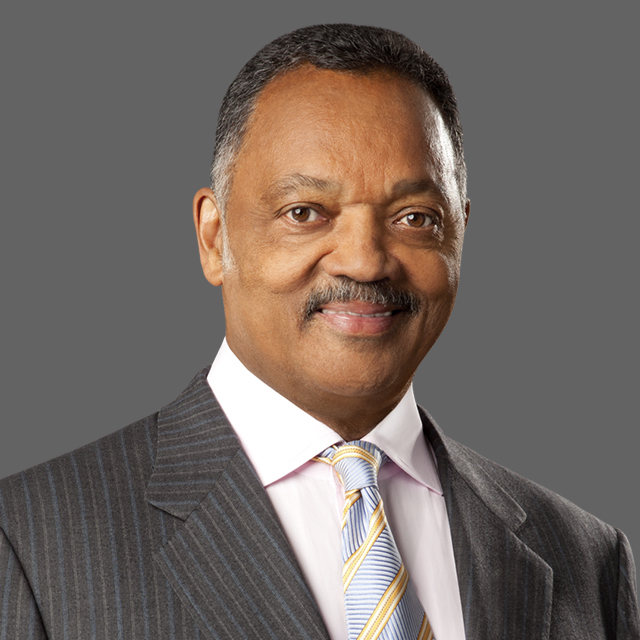
Remembering Jesse Jackson



Topics
- Agriculture
- Alabama
- Alaska
- Arizona
- Arkansas
- Border
- BREAKING
- California
- Celebrity
- College Football
- Colorado
- Connecticut
- Crime
- Culture
- Delaware
- Education
- Election
- Energy
- Entertainment
- Featured
- Finance
- Florida
- Florida News
- florida-news
- Food
- Front Page
- Georgia
- Hawaii
- HBCU
- Healthcare
- Hollywood Live
- Hollywood Live Extra
- Idaho
- Illinois
- Indiana
- Inspirational
- Iowa
- Kansas
- Kentucky
- Langston University
- Local
- Louisiana
- Maine
- Marketing
- Maryland
- Massachusetts
- Mental Health
- Michigan
- Mid-Atlantic
- Midwest
- Millwood Public Schools
- Minnesota
- Mississippi
- Missouri
- Montana
- Movie Reviews
- Music
- National
- Navada
- Nebraska
- New Hampshire
- New Jersey
- New Mexico
- New York
- News
- North Carolina
- North Dakota
- Northeast
- OCCC
- Ohio
- Oklahoma
- Oklahoma City
- Oklahoma City Public Schools
- Oklahoma Sports
- Opinion
- Oregon
- Pennsylvania
- Podcasts
- Politics
- Rocky Mountains & Plains
- South Carolina
- South Dakota
- Southeast
- Southwest
- Sports
- Tech
- Tennessee
- Texas
- Texas News
- Tulsa
- Utah
- Vermont
- Veterans
- Virginia
- Voting
- Washington
- West Coast & Pacific
- West Virginia
- Wisconsin
- Wyoming
More
More like thisRelated
Medical Notes: A New Low-Calorie Sugar, The Neurological Differences Of Autism, And How To Tell If Your Cancer Treatment Is Working

Are autistic brains structurally different?
A new study in the...
From Doctor To Patient: Lessons In Self-Advocacy From A Physician
Dr. Sylvia Owusu-Ansah’s life took a turn when a...
Chernobyl doctor found not reliable to testify in cancer case

Lawyers hoping to convince juries that diesel exhaust causes...
Foxx: Higher ed ruling saves American taxpayers $559B
(The Center Square) – To the official termination of...